





A diamond can hold a memory you'll want to keep with you always. Perhaps you're looking for a ring for a special moment, a necklace to wear every day or earrings that complete your favourite outfit. The right diamond makes your jewellery personal. But what should you look for when buying a diamond? Size, sparkle, colour and origin all play a part.
In this diamond guide, you'll learn how to judge diamond quality, which choices fit your budget and which piece of diamond jewellery suits your personal style. That way, you make a choice that not only looks beautiful but feels right too.
What is a diamond?
A diamond is a gemstone made of carbon atoms arranged in a crystal structure. Natural diamonds form deep within the earth under high pressure and temperature over extremely long geological periods. Thanks to their hardness, the way they reflect light and their distinctive brilliance, diamonds have been used in jewellery for centuries. A diamond is very hard, but not unbreakable: a hard knock can damage the stone.
What makes diamonds so special is the way they reflect and refract light. A well-cut diamond can show a lively sparkle. At the same time, every diamond is unique. Natural variations in colour, inclusions, cut and proportions give each stone its own character. The meaning you give a diamond also makes the piece special – an engagement, an anniversary, a personal milestone or a gift that shows someone how much they mean to you.
Knowing the characteristics of a diamond helps you look beyond size or price alone. You'll discover which qualities matter most to you and where you might save without compromising on the look you want.
How is diamond quality determined?
The quality and value of a diamond are assessed on several characteristics. The best-known international grading system is the 4 Cs: cut, colour, clarity and carat. Together, they help you compare diamonds. No single characteristic tells the whole story, and the way the stone combines with the design and setting of the jewellery matters too.
The 4 Cs of diamonds
The 4 Cs give you a practical basis for judging diamond quality.
- Cut: how well the diamond has been cut and how it reflects light.
- Colour: how colourless a diamond is, or how visible its tint.
- Clarity: the presence and visibility of internal inclusions and surface blemishes.
- Carat: the weight of the diamond.
These characteristics work together to shape the final look and can also affect the price. A diamond with a higher carat weight, for example, isn't automatically more expensive or more beautiful than a smaller stone with excellent clarity, colour or proportions.
Diamond cut and diamond shapes
The cut largely determines how much light a diamond reflects back to the eye. A well-cut diamond returns incoming light more effectively and therefore sparkles more. When grading the cut, proportions, symmetry and finish all play a role.
In everyday language, "cut" is also used to describe a diamond's shape, but there's a difference. Cut quality is about how the facets are arranged and how the stone handles light. Shape describes the outline of the diamond.
Popular diamond shapes include:
- Round: a much-loved choice for a classic, sparkling look.
- Oval: an elongated shape that looks elegant and can visually lengthen the finger in a ring.
- Baguette: a rectangular shape with long, straight facets and a calm, graphic look.
- Pear: a teardrop shape that is both rounded and pointed, creating a distinctive accent.
- Heart: a romantic shape with two rounded lobes and a clear point at the bottom. Its symmetry demands precise cutting.
- Emerald cut: a rectangular shape with cut corners and broad, step-like facets. Rather than intense sparkle, the emphasis is on clear reflections and depth.
- Cushion cut: a square or rectangular shape with rounded corners, like a cushion. It combines soft contours with a warm, classic look.
- Radiant cut: a square or rectangular shape with cut corners and many facets, giving a lively sparkle and a bold look.
Which diamond shape suits you depends on your taste and the design of the piece. Want plenty of sparkle? Pay close attention to cut quality – looking at the shape alone isn't enough.
Diamond colour
For most white diamonds, colour is graded on a scale from D to Z. D means colourless; the closer you get to Z, the more visible a yellow or brown tint usually becomes. Grading takes place under standardised conditions.
A colourless diamond often has a bright, white look, while a diamond with a slight tint can have a warmer character. There are also coloured diamonds, such as yellow, pink and blue stones. These fancy coloured diamonds are graded using different colour criteria.
Colour can affect value, but also how the diamond works with the metal of your jewellery. White gold can emphasise a cool, bright look, while yellow gold suits a warmer one. So don't just look at the letter on a certificate – consider the whole picture.
Diamond clarity
As a natural diamond forms, small characteristics can develop inside the stone. These internal features are called inclusions; irregularities on the surface are known as blemishes. Together they determine a diamond's clarity grade.
Clarity is assessed on the size, number, position and visibility of these features under magnification. The standard diamond clarity scale runs from FL (Flawless) to I3 (Included; P3 on the European scale), with several grades in between.
Inclusions don't automatically make a natural diamond less attractive. Many aren't visible to the naked eye, so a stone with a lower clarity grade can still look beautiful. Buying a diamond for everyday wear? Check whether any inclusions affect how the stone looks. The balance of clarity, cut and price often matters more than the highest grade alone.
Diamond carat weight
Carat is the unit used to express the weight of a diamond. One carat equals 0.2 grams, so a 0.50-carat diamond weighs 0.1 grams.
Carat doesn't tell you directly how big a diamond looks. Shape, cut and proportions also influence how large the stone appears from above, so two diamonds of the same carat weight can look different.
Note the difference between carat for diamonds and for gold. For a diamond, carat refers to weight. For gold, it refers to the proportion of pure gold in an alloy – 14ct gold contains a different share of gold than 18ct gold. In the UK, both are abbreviated "ct", while in the US gold purity is written as karat ("k" or "kt"), as in 14k. Read more in our gold guide.
Which diamond quality is right for me?
The best diamond quality is different for everyone. It's about balancing your budget, the look you want, when you'll wear it and your personal preference. Top grades on all 4 Cs aren't automatically the best buy for your situation.
Keep these points in mind:
- Budget: decide in advance what you want to spend, then compare diamonds within that budget and see which characteristics make the difference for you. A slightly lower carat weight might leave room for a better cut, for example.
- How you'll wear it: a diamond in a ring you wear every day calls for attention to a secure setting and comfort. For earrings or a necklace, you may have different priorities.
- Personal preference: do you love a subtle sparkle, or a diamond that catches the eye straight away? Shape, colour and size together create the look.
- Balance between the 4 Cs: look at the characteristics together. A well-cut diamond you love the look of can be more appealing than a larger stone whose cut you're less happy with.
When comparing, ask for the exact specifications of the stone: carat weight, colour, clarity and, where available, the cut grade. An independent grading report can help verify these characteristics. The information available varies by diamond and piece of jewellery.
What types of diamonds are there?
Natural diamonds
A natural diamond forms deep within the earth and is eventually brought closer to the surface by geological processes. Natural diamonds are special because of their geological origin and the conditions in which they formed. Their inclusions and other characteristics can reveal something about how they came to be.
The availability of natural diamonds with certain characteristics is limited. Rarity, quality, demand and other factors can influence the price. For some people, the natural origin is what appeals most; others value the personal story they connect to the stone.
With a natural diamond, it's wise to check the stated characteristics and any documentation. If in doubt, ask about its origin and the available diamond certificate or grading report.
Lab grown diamonds
A lab grown diamond, also called a lab diamond, is produced in a laboratory using techniques that recreate the conditions in which diamonds form. It has the same chemical composition and crystal structure as a natural diamond. Both are real diamonds; only their origin differs.
Lab grown diamonds also vary in carat weight, cut, colour and clarity. They cost less than a natural diamond with comparable specifications, although the difference depends on the current market and the individual stone. Their value may also develop differently over time.
People choose lab diamonds for various reasons: the price, the chance to choose a larger stone within budget, or a preference for laboratory production. Others prefer a diamond's natural origin. No choice is best for everyone – clear information about the type of diamond helps you make the decision that fits your wishes.
How do you care for diamond jewellery?
Diamonds are very hard, but that doesn't mean diamond jewellery needs no care. Skin oils, soap residue, perfume and beauty products can build up on the stone and metal, dulling the sparkle. Careful cleaning and care help keep your jewellery looking its best.
- Clean regularly: use a soft cloth and, where suitable for the stone and metal, lukewarm water with a mild cleaning agent. If in doubt, ask a jeweller.
- Store pieces separately: use a jewellery box with compartments so pieces don't rub against each other.
- Limit contact with products: take off your jewellery before applying perfume, hairspray or skincare.
- Have the setting checked: have it checked periodically that the diamond is still secure, especially in rings you wear every day.
- Take care during intensive activities: remove jewellery for sport, heavy work or anything where it could get knocked.
Don't simply use harsh cleaning products or an ultrasonic cleaner – not every setting, combination of materials or additional gemstone can handle it.
Want to know more? Read our tips on caring for and cleaning your jewellery.
Which diamond jewellery suits me?
A diamond truly shines when the stone suits the design, your daily routine and the meaning you give the piece. So don't just think about specifications, but also about how and when you'll wear it.
Choosing a diamond ring
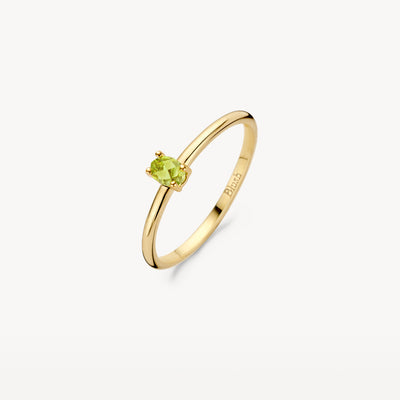
A diamond ring can symbolise love, commitment or a personal milestone. The size of the diamond partly determines how eye-catching the ring is, while the shape and setting define its character. Wearing it every day? Pay attention to comfort, a secure setting and how high the diamond sits above the band. A subtle design is comfortable for everyday wear, while a larger stone makes a statement.
Discover our complete diamond jewellery collection and see which designs suit you.
Choosing a diamond necklace
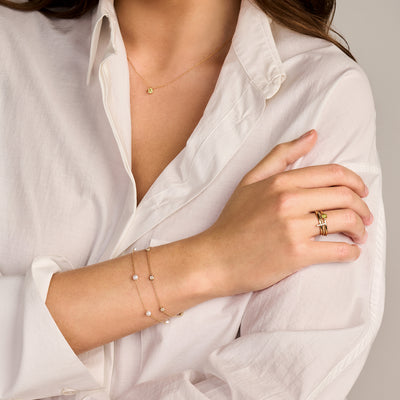
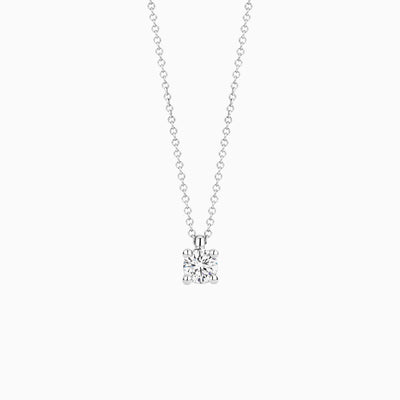
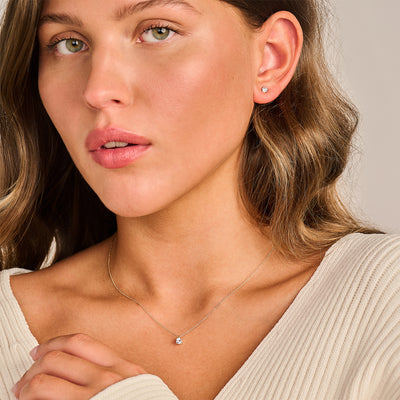
A diamond necklace can add a subtle sparkle to an everyday outfit or be the centrepiece of a special look. A small diamond on a fine chain is easy to combine with other jewellery, while a larger pendant or a design with several stones draws more attention.
Consider the length of the necklace and where the pendant falls, too. A shorter necklace places the accent higher at the neck, while a longer one sits differently over your clothes. Match the length and design to your neckline and the jewellery you like to wear with it.
Choosing diamond earrings
Diamond earrings are perfect if you love a subtle sparkle around your face. Small diamond studs are a practical choice for an understated look, while hoops, ear charms or earrings with larger diamonds stand out more.
Think about weight, fastening and comfort, too. Want to combine several earrings? Try a small diamond stud in your first piercing paired with a fine gold hoop. Browse our diamond earrings for different designs.
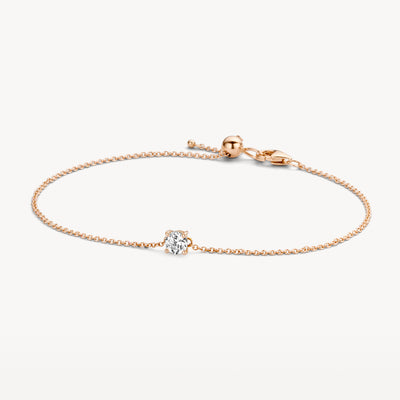
Choosing a diamond bracelet
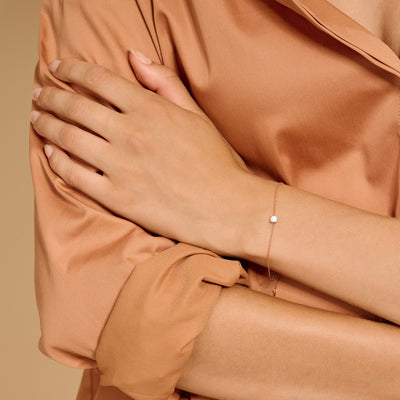
A diamond bracelet gives your wrist a refined accent and can be worn alone or stacked with other bracelets. When choosing, consider the length, the clasp and freedom of movement. A bracelet should sit comfortably without being too tight or too loose.
The setting makes a difference too. A design with small diamonds looks subtle, while a bracelet with larger stones draws more attention. For everyday wear, watch out for protruding parts that could catch on clothing. Choose a style that suits your other jewellery and the moments you plan to wear it.
Frequently asked questions about diamonds
What are the 4 Cs of a diamond?
The 4 Cs are cut, colour, clarity and carat. They describe a diamond's cut quality, colour, purity and weight, and together help you compare diamond quality. Always look at them together – a higher grade in one area doesn't automatically make a diamond the best choice for you.
What does carat mean for a diamond?
Carat is the weight of a diamond: one carat equals 0.2 grams. Weight doesn't directly determine how big a diamond looks, because shape and cut also affect its visible size. For gold, carat refers to the proportion of pure gold in the metal.
How can you tell if a diamond is real?
You can't always tell reliably with the naked eye whether a stone is a real diamond. Natural and lab grown diamonds are both real diamonds. An independent assessment by a qualified gemmologist or a reputable laboratory can determine the type of stone. Don't rely on at-home tests alone.
What is the best diamond quality?
The best diamond quality depends on your budget, personal preference and how you'll wear the piece. A well-cut diamond can give plenty of sparkle, while colour and clarity also shape how the stone looks. Compare the 4 Cs and choose the combination that suits you – you don't need the top grade in every category for a beautiful result.
What should you look for when buying a diamond?
Look at the diamond's specifications, the quality of the cut, the price and the reliability of the seller. Check whether a certificate or independent grading report is available and which stone and characteristics it describes. Ask about the setting, the metal and the terms for warranty, care and returns too. That way you judge not just the diamond but the whole piece of jewellery.
How do I best care for my diamond jewellery?
Clean your jewellery gently using a method suitable for the diamond, the metal and the setting. Store pieces separately, limit contact with perfume and skincare and have the setting checked regularly.
Don't use harsh cleaning products without advice. For delicate or composite pieces, professional cleaning is often the safest option.
Is a bigger diamond always better?
No – a higher carat weight doesn't automatically make a diamond more beautiful. Cut, colour, clarity and proportions all shape its appearance. A slightly smaller diamond with a good cut can sparkle more than a larger stone with less favourable proportions. Look at the full combination of characteristics and at what you find beautiful.
Have a question about our diamond jewellery? Feel free to contact us. The Blush team is happy to help you find a piece of diamond jewellery that makes you or your loved one shine!