
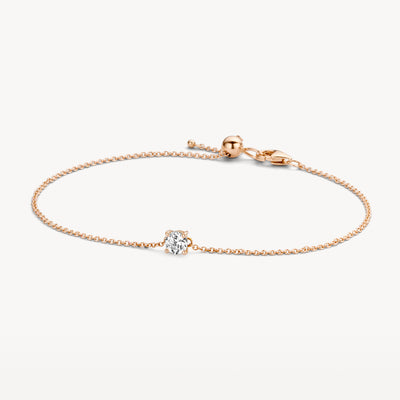
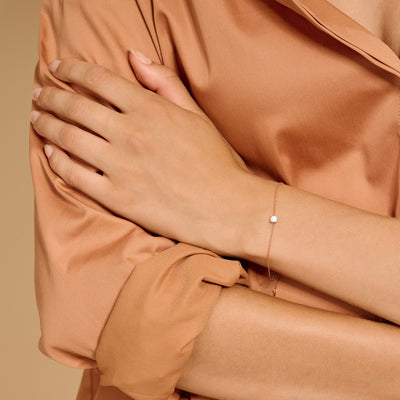
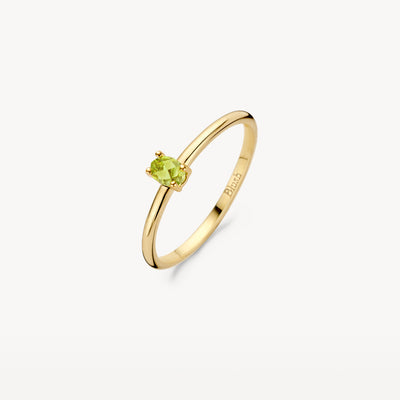
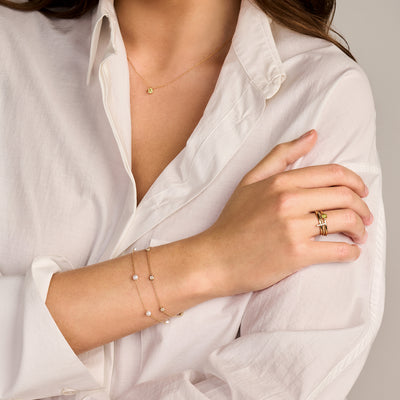
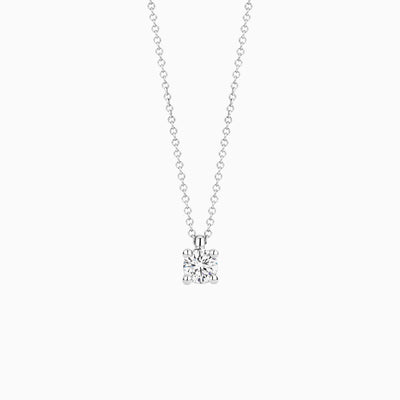
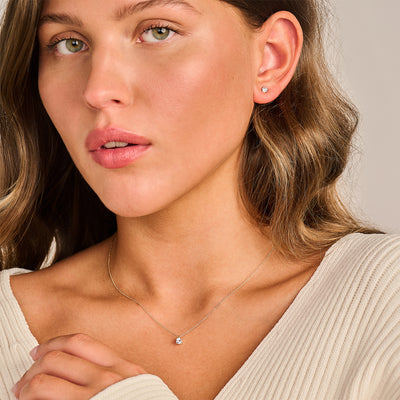

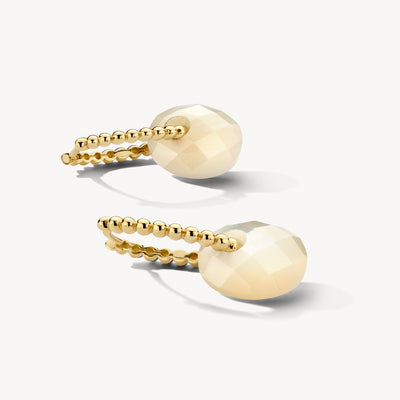


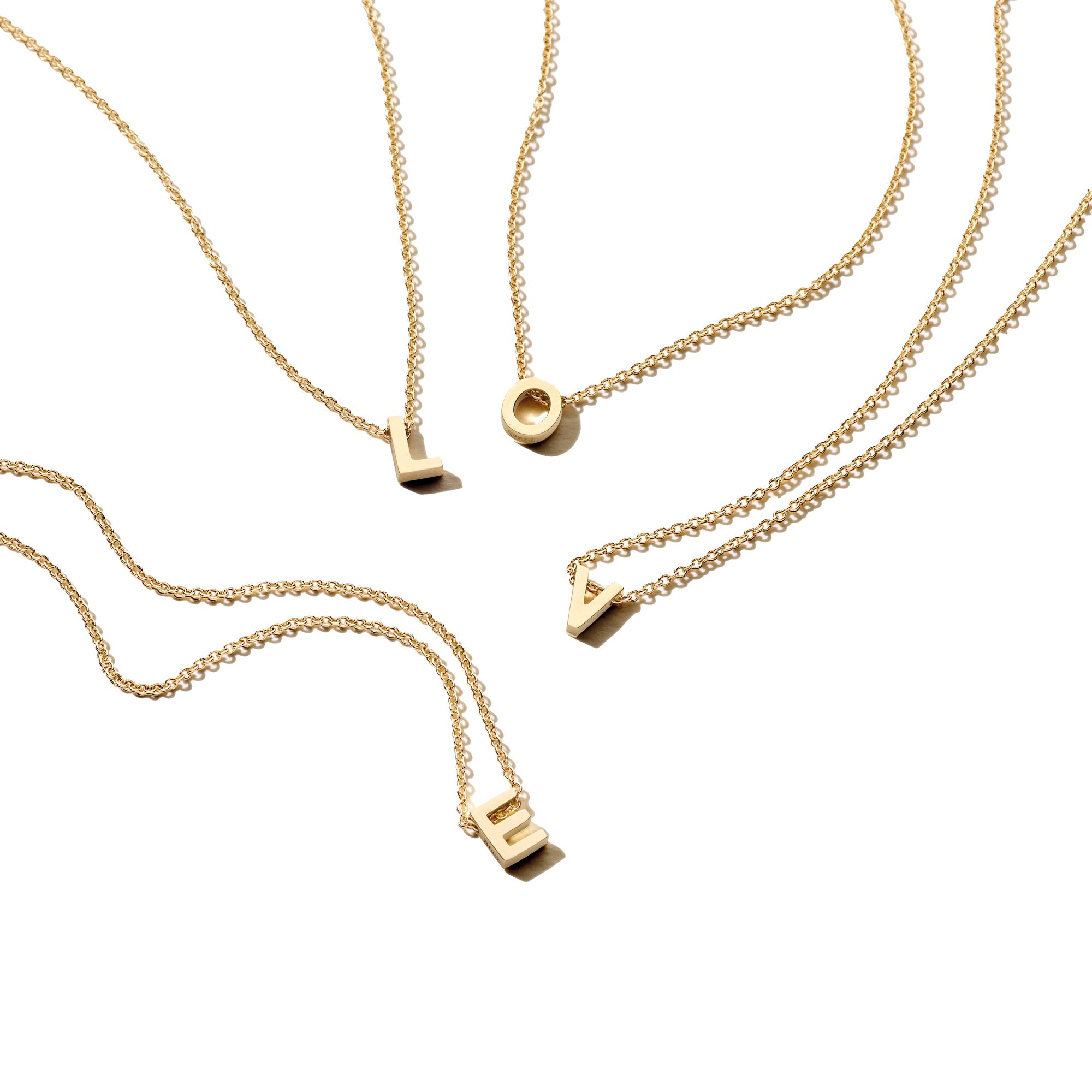


A piece of gold jewellery is often more than a beautiful addition to your outfit. It can be a reminder of a special moment, a gift for someone dear to you or a personal detail you love wearing every day. Think of a radiant 14ct gold necklace, a yellow gold bracelet or a white gold ring with a green diamond. That's exactly why you want to choose a piece that suits not only your taste but also your life. But what's the difference between 14ct and 18ct gold? Which gold colour suits your personal style, and what should you look for when buying gold jewellery?
In this gold guide from Blush Jewels, you'll discover what makes gold special, how to recognise the different types of gold and which gold jewellery suits you.
What is gold?
Gold is a naturally occurring precious metal known for its warm lustre, resistance to corrosion and malleability. It has been used in jewellery for centuries for its beauty and its ability to stay beautiful for a long time. Gold is also relatively unreactive, so under normal conditions it doesn't oxidise as easily as many other metals. That makes it a favourite material for jewellery you want to wear often.
Pure gold is soft, which makes it more prone to scratches, bending and wear than many alloys. That's why gold for jewellery is usually combined with other metals, creating a stronger alloy that can be suitable for everyday wear. The ratio of pure gold to added metals determines the carat and influences the colour and properties of the piece. At Blush Jewels, all our gold jewellery is made from 14ct gold, available in yellow gold, white gold and rose gold.
What does carat mean for gold?
Carat indicates how much pure gold an alloy contains. The higher the carat, the greater the proportion of pure gold. That's useful to know when comparing gold jewellery, because it tells you something about the composition of the material. In the UK, gold purity is written as "ct" (14ct); in the US it's written as karat, "k" (14k).
How is the purity of gold determined?
Gold purity is expressed in carats. 24ct is the term for virtually pure gold – ideally 100% gold. In practice, the exact composition can depend on the standard used and the impurities permitted.
Because pure gold is relatively soft, it is combined with other metals for most jewellery. These alloys make the material better suited to a range of designs and everyday wear. A lower carat therefore doesn't mean a piece isn't real gold – it simply contains a smaller proportion of pure gold.
What is 14ct gold?
14ct gold (also written as 14k gold) contains 58.5% pure gold, which is why it's also known as 585 gold. The remaining 41.5% consists of other metals that together influence the properties and colour of the alloy.
Thanks to this composition, 14ct gold is generally harder than gold with a higher carat. That makes it a popular choice for jewellery worn regularly, such as rings, necklaces, bracelets and earrings. It's still important to bear in mind wear, knocks and the care a piece needs.
At Blush Jewels, 14ct gold is at the heart of our collection. It offers an attractive combination of real gold, wearability and a refined look. Get inspired and explore our gold jewellery collection to find the designs that suit you.
What's the difference between 14ct and 18ct gold?
The main difference between 14ct and 18ct gold is the proportion of pure gold: 58.5% in 14ct compared with 75% in 18ct. This affects the composition, colour and properties of the material. Which suits you best depends on your preferences, your budget and how you want to wear the piece.
This table shows the main differences:
| Property | 14ct gold (585) | 18ct gold (750) |
|---|---|---|
| Pure gold | 58.5% | 75% |
| Other metals | 41.5% | 25% |
| Durability | Generally harder and more wear-resistant | Generally softer |
| Suitable for everyday wear | Yes, depending on design and use | Yes, with attention to wear |
| Colour | Depending on the alloy, often slightly more subtle | Depending on the alloy, often a richer tone |
| Price | Often more affordable | Often higher for a comparable design |
There's no single carat that's the best choice. Looking for gold jewellery to wear regularly? Then 14ct is a practical option. Prefer a higher proportion of pure gold? Then 18ct may appeal. Always consider the full composition and finish of the piece, not just the carat.
What colours of gold are there?
The colour of gold is determined by the metals the pure gold is combined with. The three best-known varieties are yellow gold, white gold and rose gold. Each has its own character and can give the same type of jewellery a different look.
Yellow gold
Yellow gold has that familiar, warm gold colour. It's a popular choice if you love the classic look of gold and want jewellery that's easy to combine with other gold accessories.
The exact shade depends on the composition of the alloy. Yellow gold can beautifully complement warm skin undertones, but it can also contrast nicely with cooler ones – so don't let your skin tone be your only guide.
Focus on the colours you love to wear and the jewellery that suits your personal style. Discover our yellow gold jewellery collection for necklaces, rings, earrings and bracelets with a warm gold tone.
White gold
White gold is made by combining gold with other metals that give the alloy a lighter colour. The final shade and finish depend on the composition. White gold jewellery has a bright, understated look and is often chosen for designs with diamonds, because the light colour complements the stone's sparkle.
White gold can suit both warm and cooler skin undertones. It's also a great choice if you like wearing silver-coloured accessories but value the qualities and worth of gold jewellery.
Bear in mind that white gold often has a rhodium plating to enhance its bright, white finish. Depending on the finish and how often it's worn, this plating can wear and may need to be reapplied.
Rose gold
You'll recognise rose gold by its warm pink to reddish tone. This colour comes from adding copper, among other metals, to the gold alloy. The exact shade depends on the ratio of the metals used.
Rose gold jewellery is a lovely choice if you prefer something softer and warmer than classic gold. It pairs well with neutral tones and can add a subtle touch of colour to your jewellery collection. As with any gold colour, the best choice mainly depends on your personal preference and the colours you like to wear.
Why choose 14ct gold jewellery?
You often choose a piece of gold jewellery with the intention of wearing it regularly. That's why it's wise to look not only at its appearance but also at its composition and how you'll use it.
The main advantages of 14ct gold:
- Suitable for everyday wear: 14ct gold is generally harder than alloys with a higher gold content. How well it resists wear also depends on the design, thickness and finish.
- A precious look: with 58.5% pure gold, you're choosing real gold with a recognisable gold colour and a refined finish.
- A good balance between quality and price: 14ct contains less pure gold than 18ct, so it's often more affordable for comparable designs.
- A choice for the long term: with careful use and the right care, gold jewellery can stay beautiful for years.
At Blush Jewels, 14ct gold is the foundation of our collection, with a choice of designs and gold colours. The material suits all kinds of jewellery, from a fine necklace you wear every day to a ring with special meaning. The right choice starts with what matters to you – comfort, the design or the moments you want to wear it.
Explore our complete gold jewellery collection and find the style that fits your wishes.
How can you tell if gold is real?
When you buy gold jewellery, you want to know exactly what you're getting. A few key points help you understand the material information:
1. Check the hallmarks
In the Netherlands, where Blush is based, gold items can carry an official hallmark under certain conditions. Which gold hallmarks are required or permitted depends on factors such as weight, the type of item and the applicable regulations. A hallmark can tell you about the gold content, but it needs to be interpreted correctly.
2. Look at the purity stamp
Stamps such as 585 and 750 refer to the gold content: 585 means 58.5% gold (14ct) and 750 means 75% gold (18ct). Such a stamp is a useful starting point, but on its own it isn't always conclusive proof of the composition.
3. Buy from a reliable seller
Look for a clear product description, transparent material information, clear terms and accessible customer service.
4. If in doubt, have the piece professionally assessed
Have an heirloom or second-hand piece whose composition you don't know? Have it assessed by a jeweller or another expert. Looking at the colour or using a magnet isn't enough to determine whether a piece is real gold.
How do you care for gold jewellery?
With the right care, you keep the shine of your gold jewellery and limit unnecessary wear. Even real gold can look dull from skin oils, cosmetics, soap and everyday wear. The best way to clean a piece depends partly on its finish and any stones.
How to clean and care for your gold jewellery
1. Cleaning your jewellery
For simple cleaning, use a soft cloth and, if the material and any stones allow it, lukewarm water with a mild cleaning agent. Rinse gently and dry the piece thoroughly. Avoid harsh cleaning products.
2. Storing your jewellery
Store pieces separately in a jewellery case or soft pouch. This reduces the risk of scratches, tangled chains and damage from contact with other jewellery.
3. Avoid chemicals
Ideally, take off your jewellery before swimming, exercising, showering or cleaning. Perfume, creams, chlorine and other chemicals can affect the finish or stones.
4. Check your jewellery regularly
Check now and then that clasps work properly and stones are still secure. If in doubt, have a jeweller check the piece.
5. Polish gently
Use a suitable polishing cloth and avoid abrasive materials. White gold with rhodium plating needs extra care, as intensive polishing can affect the finish.
For more care tips, read our blog with practical advice to keep your jewellery shining for longer.
Which gold jewellery suits me?
The right piece of gold jewellery suits your style, daily routine and personal preferences. Think about when you'll wear it, the jewellery you already own and the look you're after. These tips help you choose with confidence.
Choosing a gold necklace
Looking for a gold necklace? Length, chain style and shape all play an important role. A shorter necklace suits an open neckline, while a longer one leaves more room for a pendant or a layered look.
Wearing your necklace every day? A design that's comfortable and easy to combine with your clothes is a good starting point. Want to layer several necklaces? Vary the lengths and chain styles so they don't keep tangling.
Browse our gold necklaces and check the stated length and extender for each design.
Choosing a gold ring
A gold ring can carry personal meaning – as a reminder of a special occasion or a gift to yourself. Think about the shape, width and details. A fine ring can be worn subtly or stacked with other rings for a statement look, while a bold design can be the centrepiece of your outfit.
The right size is essential for comfort. Measure your ring size carefully and take the width of the ring and the shape of your fingers into account. Unsure between two sizes? Ask for advice before you order.
Discover our gold rings and choose a design that matches the meaning you want to give it.
Choosing gold earrings
Earrings frame your face and can be a subtle detail or a striking accent. Small stud earrings are practical for everyday wear and easy to combine with other jewellery. Larger hoops or drop earrings draw more attention and can add character to a simple outfit.
Consider weight, fastening and comfort. Wearing several earrings at once? Mix different sizes – a calm base with one more eye-catching pair creates a cohesive look.
Gold hoop earrings in different sizes and textures
With gold hoop earrings, it's not just the gold colour and shape that make the difference – size and texture shape the look too. Think of hoops of 14 mm, 20 mm or 28.4 mm. Smaller hoops and huggies sit closer to the ear for a subtle look, while larger diameters add a bold accent to your outfit.
Pay attention to the tube thickness, too: the thickness of the material the hoop is made from. A fine hoop looks delicate, while a thicker one has more volume and presence. Check the stated dimensions for each design, as diameter and tube thickness vary.
Texture offers plenty of options as well. Smooth hoops have a sleek, polished finish and are easy to combine with other gold jewellery. Rope hoops have a twisted pattern that adds texture and detail. Bubble or beaded hoops stand out with their rounded shapes and playful texture. Pavé hoops, with small stones set closely together, add extra sparkle.
Our collection includes smooth hoops, twisted designs and hoops with pavé-set zirconia. Looking for a versatile everyday staple? A smooth hoop is a great choice. Want more character or sparkle? A twisted, beaded or stone-set hoop may suit your style better. Browse our gold earrings and gold hoop earrings to discover the differences in shape and size.
Choosing a gold bracelet
With a gold bracelet, the size, the chain style and how you want to combine it are key. A fine bracelet suits an understated look, while a wider or more detailed design stands out more. Want to stack several bracelets? Combine a fine chain bracelet with a smooth bangle, for example, or vary the shape and thickness. Wear stacked bracelets close to the wrist so they don't slide over and under each other as much – that reduces the risk of scratches.
Measure your wrist and check the bracelet length before ordering. A bracelet that's too tight can be uncomfortable; one that's too loose is more likely to catch on something. Explore our gold bracelets and choose a design that fits your everyday style.
Frequently asked questions about gold jewellery
Is 14ct gold real gold?
Yes, 14ct gold is real gold and contains 58.5% pure gold. The remaining 41.5% consists of other metals that influence the properties and colour of the alloy. The stamp 585 refers to the same gold content.
Does 14ct gold stay beautiful?
Yes, with careful use 14ct gold can stay beautiful for years. It's relatively hard-wearing, but not immune to scratches, wear or damage. Store your jewellery carefully, avoid harsh chemicals and clean it in a way that suits the finish and any stones.
Which gold colour suits me?
The best gold colour is the one you feel good in. Yellow gold has a warm, classic tone that works well with a smart outfit, and its warm glow flatters almost everyone. White gold looks lighter and suits many different looks. Rose gold has a pink undertone thanks to the addition of copper. Your skin undertone can offer inspiration, but your personal style and taste matter just as much.
Is 14ct gold suitable for everyday wear?
Yes, 14ct gold is generally suitable for everyday wear. Suitability also depends on the design, thickness, finish and any gemstones. Ideally, take off your jewellery for sport, swimming, cleaning and other activities where it could be damaged.
Can I mix different gold colours?
Yes, yellow, white and rose gold look great worn together. Bicolour jewellery makes it easy, as it already combines two gold colours. Choose the combinations that suit your taste and the shapes of your jewellery.
Still have questions about our gold jewellery? If your question isn't answered here, feel free to contact us. At Blush Jewels, we're happy to help you find a piece of 14ct gold jewellery that makes you or your loved one shine!